Can the Pistons survive without Cade Cunningham?

The Detroit Pistons have spent this season rewriting their own narrative. For a franchise that has endured years of rebuilding, inconsistency, and growing pains, this year has represented something entirely different. It has been about arrival. It has been about validation. It has been about proving that what they have built is real and sustainable.

Now, just as everything has come together, they are being asked the one question that could ultimately define their season.

Can they survive without Cade Cunningham?

Detroit is on pace for its third 60-win season in franchise history. That alone speaks volumes about the scale of their turnaround. They have not just improved, they have surged into relevance, establishing themselves as one of the most complete and disciplined teams in the league. They have clinched the Central Division title, and they have done so with consistency, structure, and a clear identity that has translated from opening night to the final stretch of the regular season.

This has been a team defined by its defense and depth, a throwback to the classic rugged Detroit style that once made them champions. They have defended at a high level, competed on every possession, and imposed their will physically on both ends of the floor. They do not rely on shortcuts. They grind. They execute. They wear teams down over the course of games.

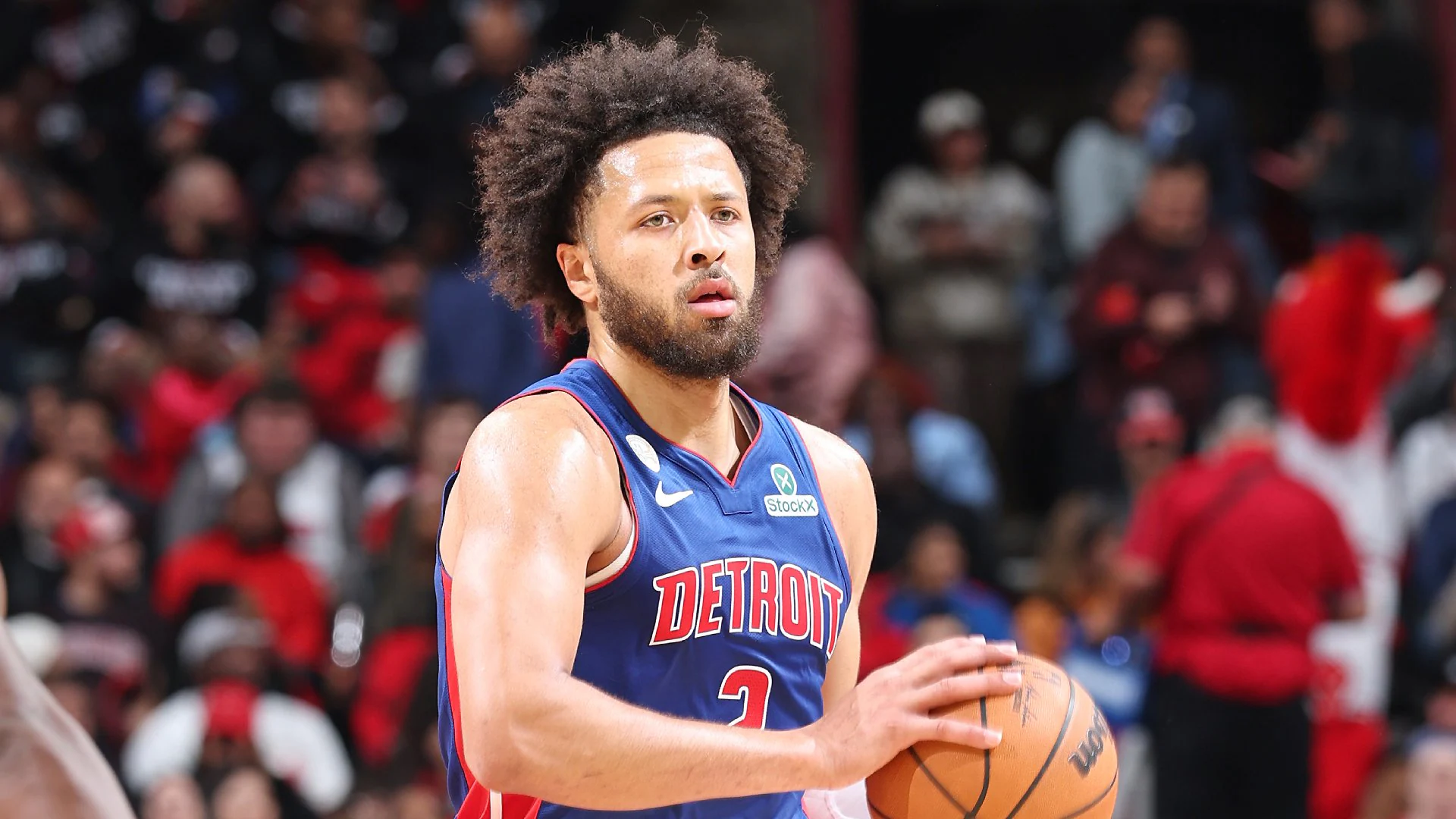
At the center of all of it has been Cunningham, the engine that keeps everything connected.

And now, suddenly, he is gone.

The diagnosis of a collapsed lung is not just another injury that can be managed through minor adjustments. It is abrupt, serious, and disruptive in a way that alters the trajectory of a team overnight. It removes not only Detroit’s best player, but also its organizer, its closer, and its emotional anchor. With the playoffs approaching, the Pistons are left scrambling to adjust, recalibrate, and preserve everything they have worked for.

This is no longer just about how good Detroit has been: This is about how much of that identity can hold under pressure.

What Cunningham brings to the Pistons

To fully understand what Detroit is losing, you have to look beyond the surface and into the structure of how they play.

This has been an all-time season for Cunningham. Not just in terms of numbers, but in terms of command, efficiency, and control. He has evolved into one of the league’s most complete offensive guards, capable of dictating pace, creating advantages, and elevating everyone around him.

His pick-and-roll mastery sits at the core of Detroit’s offense. Every possession often begins with him reading the defense, identifying coverage, and reacting in real time. Whether he chooses to attack, pull up, or facilitate, his decision-making consistently puts the Pistons in favorable positions. He manipulates defenders with patience, keeps his dribble alive, and understands angles in a way that few guards do at his age.

He has also taken a significant leap as an isolation scorer. When the offense stalls, Cunningham becomes the release valve. He can create separation, absorb contact, and finish through traffic. His improved footwork and balance allow him to operate efficiently in tight spaces, which becomes even more valuable in late-clock situations.

As a three-level scorer, he stretches defenses in multiple directions. He can knock down perimeter shots off the dribble, attack midrange pockets, and finish at the rim with control. That versatility forces opposing defenses to constantly adjust, which in turn opens opportunities for his teammates.

His partnership with Jalen Duren has been one of the defining elements of Detroit’s success. Their chemistry in the pick-and-roll creates a consistent source of offense. Cunningham’s ability to draw attention opens up easy opportunities for Duren, while Duren’s presence as a vertical threat creates space for Cunningham to operate. It is a dynamic that balances scoring and playmaking, and it has made Detroit difficult to scheme against.

Beyond the skill set, Cunningham’s leadership is what truly separates him. He organizes the offense, communicates defensive coverages, and keeps the team composed in critical moments. He understands tempo. He understands when to push and when to slow things down. He understands what winning basketball requires.

That level of control cannot be easily replaced.

The emotional and psychological impact

There is also a layer to this situation that goes beyond strategy and rotations.

Losing a player like Cunningham at this stage of the season creates an emotional shift within the team. He is not just their best player. He is their leader, their stabilizer, and the one they naturally look to in moments of uncertainty.

When he is on the floor, there is a sense of control. There is clarity in how the game should be played.

Without him, that clarity must be rediscovered collectively.

This is where leadership from within becomes critical. Veterans like Tobias Harris and Caris LeVert now carry a heavier responsibility, not just in terms of production, but in maintaining composure and focus. Younger players must grow up quickly, understanding that every possession carries more weight.

There is also the challenge of expectation.

The Pistons have spent months building momentum and belief. They have proven they belong among the league’s top teams. Now, they must protect that belief while navigating adversity. That is not easy, especially for a group that is still relatively young.

This is where identity is tested in its purest form.

Life without Cunningham

The immediate question becomes clear. What does Detroit look like now?

The answer is not found in one player stepping into Cunningham’s role. That is not realistic, and it is not how this team has been constructed. Instead, the Pistons must lean into their depth and distribute responsibility across the roster.

Their identity remains intact. But the burden is shared.

Daniss Jenkins has already taken on a larger role, moving from a two-way guard into the starting lineup. His emergence has been timely, providing the Pistons with energy, ball handling, and a willingness to compete. He does not need to replicate Cunningham’s production, but he must provide stability and avoid costly mistakes.

Jalen Duren becomes even more central to the offense. Without Cunningham orchestrating, Detroit will likely play through Duren in different ways. That includes post touches, pick-and-roll opportunities, and even facilitating from the high post. His development as a decision-maker becomes crucial, particularly when defenses collapse.

On the perimeter, Tobias Harris, Duncan Robinson, and Kevin Huerter must elevate their production. Spacing becomes even more important without Cunningham’s ability to consistently break down defenses. These players must convert open looks and provide consistent scoring to keep the offense functional.

Ausar Thompson’s role expands as well. His ability to attack the rim, cut off the ball, and create mismatches gives Detroit another dimension. His energy and athleticism can help compensate for the loss of Cunningham’s shot creation, particularly in transition.

Defensively, the Pistons must double down on what has made them successful.

Isaiah Stewart, Javonte Green, and Ron Holland must bring increased intensity and physicality. Their ability to disrupt opposing offenses, switch across positions, and maintain defensive pressure will be critical in keeping games within reach.

Paul Reed’s role as a depth big becomes more important, providing energy and rebounding in limited minutes. Meanwhile, Caris LeVert and Marcus Sasser offer additional shot creation and ball handling, helping to stabilize the offense when needed.

This is where depth is no longer optional: It becomes essential.

Adjustments on both ends

Detroit’s path forward also requires tactical adjustments.

Offensively, they may need to simplify their approach. Without Cunningham’s advanced playmaking, the Pistons must rely more on ball movement, off-ball actions, and quick decision-making. Sets that emphasize cutting, screening, and spacing become more valuable.

Transition offense could also become a bigger focus. Generating easy points before defenses are set can help offset the loss of half-court creation.

Defensively, the margin for error shrinks. The Pistons must be even more disciplined, limiting fouls, controlling the glass, and avoiding breakdowns. Their defense must generate offense, whether through turnovers or fast-break opportunities.

This is where coaching adjustments will play a major role: Preparation, communication, and execution must all improve.

Can they survive?

The answer depends on the context. Can the Pistons remain competitive and finish the regular season strong without Cunningham? The answer is yes.

Their depth, defensive structure, and cohesion give them a foundation to win games. They have enough talent to compete on a nightly basis, especially if multiple players step up and share the load.

But the playoffs present a different challenge entirely.

The game slows down. Possessions become more deliberate. Defensive schemes become more precise. In those moments, individual shot creation becomes critical.

That is where Cunningham’s absence is most significant.

In a seven-game series, having a player who can control tempo, create offense in isolation, and deliver in late-game situations often determines the outcome. Detroit can rely on its system, but there are moments when the system needs a star to break through.

That is the reality they must face. They can survive through effort, depth, and discipline. But to truly contend, they will likely need Cunningham back.

A defining stretch

This stretch of the season will define the Pistons in ways that go beyond wins and losses.

It will test their resilience, identity, and their belief.

This is where teams either fracture under pressure or come together with greater purpose. This is where roles are solidified, trust is built, and confidence is either strengthened or shaken.

Detroit has spent the entire season proving that it belongs among the league’s best.

Now it must prove that it can endure adversity.

If the Pistons can hold the line, maintain their standard, and enter the playoffs with momentum, they will emerge stronger and more battle-tested. They will have proven that their success is not dependent on one player, but on a collective identity.

And if Cunningham returns in time, they will not just be a good team.

They will be dangerous. But for now, survival is the objective.

What comes after will depend on how well Detroit can turn this challenge into something that sharpens them rather than breaks them.