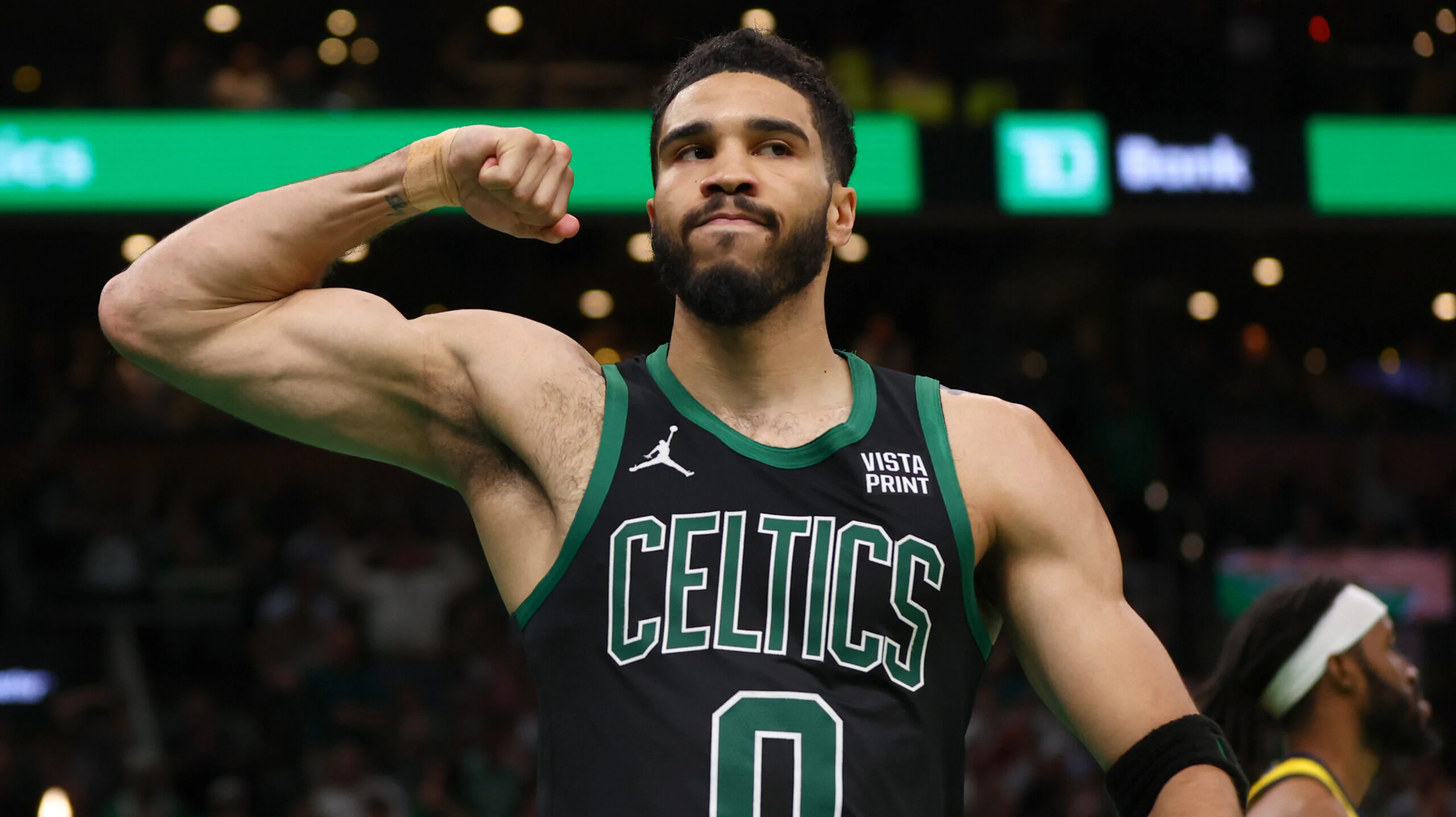
With Tatum back, can Celtics conquer the East once more?

The Boston Celtics were not supposed to be here.

Not after the night everything changed. Not after Jayson Tatum went down with a devastating Achilles tear in the second round against the New York Knicks. Not after watching their season unravel in real time, their title aspirations slipping away with each step he could no longer take.

They lost that series. More than that, they lost their centerpiece, their identity, and what many believed was their window.

For a franchise that has built itself on championship expectations, anything short of contention feels like failure. In that moment, the Celtics were staring at a future filled with uncertainty, questions that stretched far beyond a single postseason exit. How do you recover from losing a player who defines everything you do? How do you rebuild belief when the foundation itself has been shaken?

And yet, months later, Boston finds itself back in the conversation.

Not as the overwhelming favorite. Not as the juggernaut they once looked like. But as something perhaps more dangerous. A team that has endured, adapted, and discovered layers of itself that may not have surfaced otherwise.

Now, with Tatum on the verge of returning, the question shifts from survival to possibility.

Can the Celtics conquer the East once more?

A season that could have collapsed but did not

The expectation after Tatum’s injury was simple. Boston would fall back.

It made sense. Tatum is not just an All-NBA talent. He is the system’s gravitational force, the player who bends defenses, dictates matchups, and gives structure to everything the Celtics do on both ends. His presence alone simplifies decisions for everyone else on the floor. His absence complicates everything.

Remove that, and most teams crumble.

Boston did not.

Instead, Joe Mazzulla and his group leaned into what they had built over the years. The principles stayed intact. The spacing remained deliberate. The ball continued to move. The identity did not disappear, it evolved into something more collective and less predictable.

“Mazzulla Ball” lived on, not as a dependency on one star, but as a philosophy rooted in pace, decision-making, and trust. The Celtics doubled down on their spacing, leaned into quick reads, and emphasized shot quality over individual creation. In doing so, they forced opponents to guard actions rather than just players.

The Celtics became less predictable, more collective. They shifted from a top-heavy contender to a deep, resilient group that could win in different ways on different nights. Some nights it was their shooting. Other nights it was their defense. At times, it was simply their ability to execute late.

That shift did not just keep them afloat. It made them relevant again.

Jaylen Brown’s ascent into superstardom

At the center of that transformation was Jaylen Brown.

There are moments in every franchise’s timeline when a player is asked to step into something bigger than themselves. Brown did not just answer that call, he redefined his ceiling.

This was not simply a case of increased usage. This was evolution. Brown operated with control, patience, and purpose. His scoring expanded across all three levels. He attacked the rim with force, punished mismatches in the midrange, and improved his decision-making when defenses collapsed.

Just as important, his playmaking took a noticeable leap. Brown became more comfortable reading help defenders, making the extra pass, and keeping the offense flowing. That growth allowed Boston to maintain its structure even without its primary initiator.

Night after night, he carried the offensive burden. He embraced the defensive responsibility. He became the tone-setter for a team that needed stability.

What stood out most was not the numbers, although they were impressive enough to warrant MVP and All-NBA conversations. It was the consistency. The Celtics did not have the luxury of off nights from their primary option, and Brown rarely gave them one.

He also embraced the leadership aspect of the role. In huddles, in late-game situations, and in moments of adversity, Brown’s voice carried weight. That intangible shift matters just as much as any statistical leap.

In many ways, this season forced Boston to answer a long-standing question. Could Brown be the guy?

For stretches, he already has been.

The system holds, the depth emerges

Beyond Brown, Boston’s ability to stay competitive came from its depth and continuity.

Derrick White became the connective tissue. His versatility allowed the Celtics to maintain structure on both ends. He defended across positions, facilitated the offense, and provided timely scoring without disrupting flow. White’s ability to make the right play, regardless of role, made him indispensable.

Payton Pritchard and Sam Hauser remained steady. Their shooting and floor spacing ensured that Boston’s offensive identity did not collapse without Tatum. They played within their roles, understood their value, and delivered consistently.

Then came the emergence of youth.

Jordan Walsh, Baylor Scheierman, and Hugo González brought energy, length, and a willingness to contribute. They were not expected to be difference-makers this early, yet they carved out meaningful roles through effort and adaptability. Their development added another layer to Boston’s identity, one built on internal growth rather than external dependence.

In the frontcourt, Neemias Queta and Luka Garza stepped into a difficult situation. Replacing the production and presence of departed veterans is never simple, but they provided size, rebounding, and interior presence when needed. They played with physicality and energy, which often set the tone early in games.

Boston also made a calculated move by bringing in Nikola Vučević. His skillset fit seamlessly into the system. A big who can space the floor, facilitate from the high post, and provide scoring in structured sets, Vučević gave the Celtics a different dimension offensively. His presence allowed Boston to maintain spacing while still having a reliable option inside.

All of it added up to something greater than expected.

A team that, on paper, lost too much. A team that, in reality, found enough.

The cost of change and the value of continuity

It is important to acknowledge what Boston no longer has.

Veteran anchors like Jrue Holiday, Al Horford, and Kristaps Porziņģis are no longer part of the equation. Their absence removed a layer of experience, defense, and versatility that once defined Boston’s championship aspirations.

Holiday’s point-of-attack defense, Horford’s leadership and positional intelligence, and Porziņģis’ unique blend of size and shooting once gave Boston one of the most complete starting groups in the league.

In a different context, those losses would have been crippling.

But this season reframed the Celtics’ identity. It forced them to rely less on established names and more on internal growth. It tested their system, their culture, and their ability to adapt.

What remains is a group that understands how to play together, regardless of who is on the floor. There is a level of cohesion that comes from shared adversity, from navigating uncertainty together.

That may not show up in headlines, but it matters in the postseason, where execution and trust often decide outcomes.

The looming question at center

For all the positives, there are still questions. The most pressing one lies in the frontcourt.

Is Boston’s center rotation enough to compete with the best in the East?

The conference still runs through teams with size, physicality, and interior dominance. Whether it is rebounding battles, rim protection, or half-court execution, the Celtics will be tested in ways they have not consistently faced during the regular season.

Queta and Garza have provided effort and production, while Vučević adds skill and spacing. But playoff basketball is about matchups and margins.

Against elite frontcourts, every possession matters. Defensive breakdowns are magnified. Second-chance opportunities become backbreaking. The ability to protect the rim without overhelping on the perimeter becomes critical.

Can they hold their ground against elite bigs? Can they protect the paint without compromising their perimeter defense? Can they rebound at a level that prevents second-chance opportunities?

These are not small questions. They are defining ones.

The return of Jayson Tatum

And then there is Tatum.

Everything Boston has done this season has been without him. Everything they hope to accomplish moving forward depends on him.

Returning from an Achilles injury is not just about availability. It is about trust. Trust in the body. Trust in movement. Trust in the ability to be the same player, or close enough to it, when it matters most.

There will be moments of adjustment. Timing will need to be rediscovered. Rhythm will need to be rebuilt. That is the natural process of returning from such an injury.

The Celtics do not need Tatum to be perfect immediately. They need him to be impactful. They need his presence, his scoring gravity, his defensive versatility, and his ability to elevate those around him.

His return changes the geometry of the floor. It shifts defensive priorities. It creates space for Brown, for White, for everyone else who has carried the load in his absence.

But it also introduces a new dynamic.

This is no longer solely Tatum’s team in the way it once was. Brown has grown. The system has evolved. Roles have been established. Confidence has been built across the roster.

The challenge is not just reintegration. It is balance.

Can Tatum step back in without disrupting what has been built? Can the Celtics blend their pre-injury identity with the version that emerged in his absence? Can they find a rhythm where both Tatum and Brown operate at their best without sacrificing the collective flow?

If they can, Boston becomes something more than what it was before.

The psychological edge of survival

One aspect that cannot be ignored is the psychological impact of what Boston has endured.

This is a team that has already faced its breaking point. It has already experienced the loss of its best player and found a way to respond. That kind of experience builds a different level of confidence, one rooted in proof rather than belief.

When adversity hits in the playoffs, and it always does, the Celtics will not be navigating unfamiliar territory. They have already lived through it.

That matters in close games. It matters in hostile environments. It matters when momentum swings and pressure builds.

Teams that have been tested often respond differently than those that have not. Boston falls firmly into the former category.

A different kind of contender

The Celtics that could enter the playoffs are not the same team that started the season.

They are deeper in experience, even if younger in personnel. They are more adaptable, more resilient, and more aware of what it takes to win without relying on one player.

They have seen multiple versions of themselves. A team led by Brown. A team defined by its depth. A team built on system execution.

Now, they have the opportunity to add another version. One that includes Tatum.

That matters.

Playoff runs are rarely linear. They demand adjustments, resilience, and the ability to respond to adversity. Boston has already faced its adversity. It has already been forced to adjust.

Now, it has the chance to combine that experience with elite talent.

That combination is dangerous.

Can they conquer the East?

The Eastern Conference remains competitive. There are teams with continuity, teams with star power, and teams with fewer question marks.

Boston is not the cleanest contender. There are uncertainties around Tatum’s form, the center rotation, and how everything fits together at the highest level.

But there is also upside.

If Tatum returns close to his peak, if Brown sustains his level, and if the supporting cast continues to play within the system, the Celtics have a pathway.

Not an easy one. Not a guaranteed one. But a real one.

What makes this version of Boston intriguing is not just its talent. It is its story.

This is a team that was supposed to fade. A team that lost its best player and kept going. A team that discovered its depth, redefined its identity, and stayed relevant when it had every reason not to.

Now, it stands at a different kind of crossroads.

The foundation is there. The momentum is real. The belief has been rebuilt.

All that remains is the final piece.

Jayson Tatum is coming back.

And with him, so are the Celtics’ biggest ambitions.