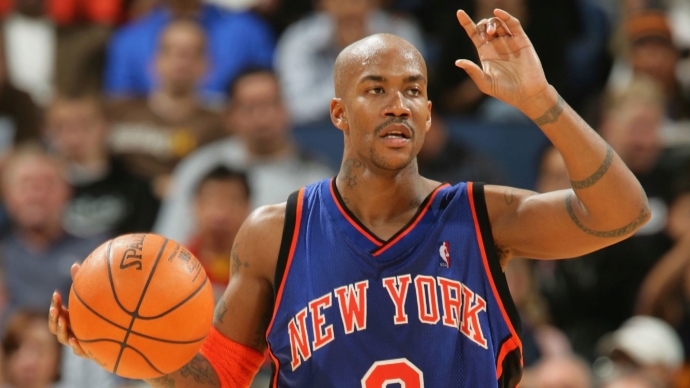
Starbury’s Truth: Marbury on New York
Numbers can imprison a man. Career statistics, win totals, court controversies, they get stamped onto a player’s identity like a tattoo applied without consent. For Stephon Marbury, those numbers have long defined how a certain segment of New York media chooses to remember him. But in an interview with the NY Daily News’ Kristian Winfield, the Coney Island native laid out a counter-argument that no spreadsheet can refute: New York basketball isn’t just in his résumé. It is in his blood.
A Birthright No Box Score Can Measure
Marbury didn’t duck the turbulence of his tenure. He acknowledged it plainly, “I get it. I understand. Things happen. Things didn’t go well”, but then he pivoted to something the critics hadn’t accounted for. He wasn’t defending his stats or his rings. He was defending his identity.
Born and raised in Coney Island, Brooklyn, Marbury grew up watching the Knicks the same way millions of New Yorkers did, not as a business investment or a professional opportunity, but as a way of life. His mother was a Knicks fan. He was a Knicks fan before he understood what a Knick was. That kind of devotion doesn’t evaporate when a contract expires or when a tenure ends messily. It endures. And at 49 years old, with a lifetime of perspective behind him, Marbury insists that love for the blue and orange has never wavered.
The media’s tendency to reduce him to his worst seasons ignores the most fundamental truth of his relationship with the franchise: he didn’t just play for the Knicks. He wanted to.
The Hardwood Perspective
One of the sharpest threads running through Marbury’s response is what could be called the “hardwood argument”, the idea that only those who have actually played the game can fully comprehend the weight of wearing a jersey under pressure. It is a perspective that cuts through media criticism with surgical precision.
When Marbury told Winfield that beat writers are “being replaced by former players,” he wasn’t just jabbing at a reporter, Brandon' Scoop B' Robinson noted in his article; he was identifying a generational shift in how sports media is consumed and trusted. Audiences increasingly gravitate toward voices with lived experience, and Marbury positions himself firmly in that camp. He knows what it feels like to lace up in a Garden that has turned on you. He knows the texture of a locker room fracturing under bad management. That knowledge isn’t theoretical. It is earned.
He was also unflinching about his own imperfection. “I can submit in the moment that I wasn’t perfect in all of what I’ve done. But I tried.” That kind of self-awareness is disarming because it removes the easy rebuttal. Marbury isn’t asking for a revisionist history. He is asking for an honest and complete one.
A Storm Shelter, Not a Savior
Perhaps the most revealing moment in Marbury’s reflections is the framing he applies to his own role during those difficult years. Recounting a conversation with a peer, he described how teams called on him not when they were thriving, but when they were drowning. He was the man brought in to weather a storm, not to build a dynasty.
That context matters enormously. The Knicks of the mid-2000s were a franchise in institutional chaos — bloated contracts, front-office dysfunction, and a coaching carousel that would have derailed any superstar. Holding Marbury solely accountable for that era’s failures requires a selective memory that conveniently forgets the environment in which he was asked to operate.
His message was simple: “I came ready, and I came prepared.” Whether the organization around him was equally prepared is a question the harshest critics rarely bother to ask.
A New Story for a New Era
At the heart of Marbury’s argument is a plea that transcends basketball: the right to be seen as a whole person, not just a highlight reel of your worst moments. His post-NBA evolution, becoming a legend in China, building a statue-worthy legacy in Beijing, transforming into a global ambassador for the sport, is the story he believes the media owes him.
As the current Knicks enjoy a rare stretch of sustained relevance and playoff hope, Marbury sees no place for backward-looking narratives. He is not asking to be enshrined alongside Clyde Frazier or Patrick Ewing; he is simply asking to cheer, loudly and authentically, for a team that has lived in his heart since childhood.
The real verdict on Stephon Marbury’s Knicks legacy may never be settled — it will depend on who you ask and what era they lived through. But one thing is beyond dispute: the passion in that MSG clip is real. And in a city that prizes authenticity above all else, that counts for something.