Donald Trump Stopped Kobe Bryant–Jayson Williams Elevator Fight (1998 NBA All-Star)
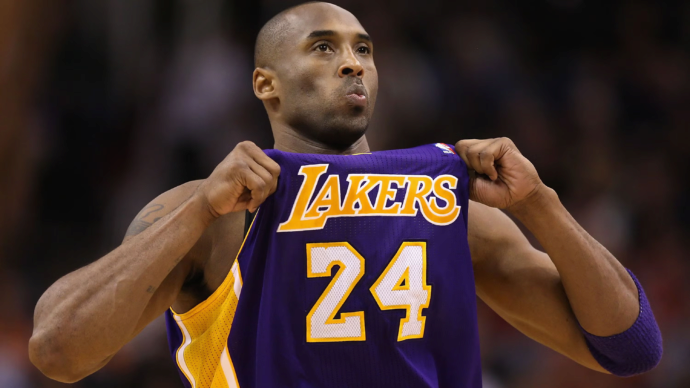
Some stories from the golden era of the NBA exist in that fascinating space between confirmed history and beloved lore, too detailed to be invented, too strange to be mundane. The tale of what happened in an elevator at the 1998 NBA All-Star Game in New York City sits squarely in that territory. It involves a teenager named Kobe Bryant, a 270-pound veteran named Jayson Williams, a near-brawl in an enclosed space, and the intervention of a man who would eventually become the 45th and 47th President of the United States.
The confined space of an elevator is the last place you want to be when a 270-pound professional athlete decides he has been disrespected enough. According to Williams's account, one he has told many times over the years with the kind of vivid detail that only a born storyteller can summon, that is exactly where things stood between him and a young Kobe Bryant during All-Star Weekend at Madison Square Garden.
A Future President Steps Between Two Giants
Williams reportedly swung at Bryant, and what started as a locker room tension between a veteran who felt disrespected and a teenager who refused to back down threatened to become something far worse. This is where the story takes its most improbable turn. Donald Trump, then a New York fixture and real estate mogul who had turned celebrity into its own kind of currency, did not step back. He stepped in.
Trump later confirmed the incident during an interview with Jake Paul, offering a characteristically direct account of what happened. "That was a long time ago. Yeah, well I was breaking up a fight, which sometimes is more dangerous than being in a fight," Trump said. "But I like Kobe. Kobe was having a hard time with somebody, and it worked out fine. But yeah, I broke it up, probably not a smart thing to do. Historically, it's never good to break up fights."
According to the account that has circulated since, Trump physically grabbed Williams and told Bryant to get out. The elevator doors opened. Kobe walked. A potential disaster for the NBA's rising star, a teenager still finding his footing in the league, was averted in one of the most unlikely moments in sports history.
"I was breaking up a fight, which sometimes is more dangerous than being in a fight... I like Kobe. Kobe was having a hard time with somebody, and it worked out fine." said Donald Trump
Charles Oakley, the Witness Who Doesn't Quite Remember
Every great piece of basketball lore needs a credible voice to place it in context, and Charles Oakley, one of the toughest and most respected players of that era, provides exactly that, even if his account comes with a caveat. Oakley, speaking with Yahoo Sports, was measured: he doesn't personally recall being in the elevator that day, but he has absolutely heard the story, told by Williams himself, on multiple occasions to multiple people.
"He had told it to some people that I was around," Oakley said to Brandon 'Scoop B' Robinson "Jayson, he liked to be a story. He's a storyteller. I told him, 'Jayson, I mean, you 55, 57. You probably told that story 50 times.'" When I spoke with Oakley separately, he echoed that sentiment. While he couldn't personally account for the specifics of the elevator incident, he was quick to note that Williams tells it with extraordinary conviction and color. "Jayson is an awesome storyteller who brings these moments to life with incredible detail," Oakley said. That endorsement, from a man who has no incentive to embellish, carries its own weight.
Jayson Williams and the Locker Room That Made History
Williams's connection to the 1998 All-Star Game runs deeper than one elevator encounter. He has vivid memories of walking into the locker room at Madison Square Garden and locking eyes with Larry Bird, who was coaching the Eastern Conference that weekend. The history between them stretched back to Williams's second game in the league, when Bird, still active and relentless, had torched him for 45 points while repeatedly demanding that the coach put the rookie back in so he could keep going.
"He just looked at me and said 'Your minutes are on the board'... And I said 'Thanks Coach' and he goes 'You f---n' rookie!' This is Larry Bird and he remembered that for 25 years!" Williams said. "He's one of the biggest and best smack talkers but he can back it up. All the time though!"
And then there was Michael Jordan, the loudest presence in a room full of legends. Williams describes Jordan's energy that day as laser-focused and entirely intentional: MJ was announcing to anyone who would listen that he wanted the ball every single possession. "He was coming in there letting us all know that he wasn't going to take the ball out because you know in the All-Star Game when you take the ball out you don't get it back," Williams explained. "He's MJ baby! He's the best who ever did it."
Why This Story Still Matters
The 1998 NBA All-Star Game produced a box score and a winner. But the stories that live from that weekend, a future president breaking up a fight in an elevator, Larry Bird's long memory for a rookie he once torched, Michael Jordan manufacturing motivation in real time, are the ones that remind you why the human element of professional basketball is as compelling as anything that happens between the lines.
Jayson Williams may have told the elevator story fifty times. But fifty tellings of a story this strange, this specific, and this perfectly placed at the intersection of basketball and American history is not repetition. It is preservation. And now it belongs to the record.